Buying land is one of the biggest investments for business owners, manufacturers, developers and investors. Whether you are planning to build a factory, warehouse, logistics hub, commercial development or simply invest for future growth, proper due diligence is essential before signing the Sale and Purchase Agreement (SPA).
Unlike completed buildings, vacant land comes with legal, planning and development considerations that can significantly affect its value, approval process and future use.
This guide explains the most important checks every land buyer should make before purchasing industrial, commercial or development land in Malaysia.
1. Identify Your Purpose
Start by understanding how you intend to use the land.
Examples include:
- Factory development
- Warehouse
- Logistics centre
- Commercial development
- Mixed development
- Investment
- Land banking
- Future business expansion
The intended use will influence the type of land, zoning and approvals required.
2. Verify the Land Title
Always obtain a copy of the land title before making any commitment.
Check the following:
- Freehold or Leasehold
- Individual Title or Master Title
- Land area
- Registered owner
- Restrictions in Interest
- Express Conditions
- Existing charge to a bank
- Private caveat or other encumbrances
Understanding the land title helps avoid legal complications later.
3. Check the Land Category
The land category determines its current approved use.
Common categories include:
- Agricultural
- Industrial
- Building
- Commercial
Buying land with the wrong category may require additional approvals before development can begin.
4. Confirm the Planning Zoning
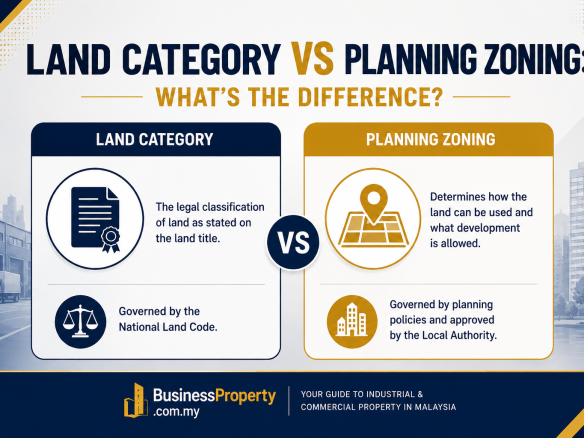
Many buyers mistakenly believe that land category and planning zoning are the same.
They are different.
Planning zoning is determined by the Local Authority and indicates how the land is planned to be used in the future.
Examples include:
- Industrial
- Commercial
- Residential
- Mixed Development
- Open Space
Always confirm the zoning before purchasing.
5. Find Out if Land Conversion is Required
Some land requires conversion before development.
Examples include:
- Agricultural to Industrial
- Agricultural to Commercial
- Agricultural to Residential
If conversion is required, buyers should understand:
- Approval requirements
- Conversion premium
- Estimated timeline
- Professional costs
6. Check Road Accessibility
Access is one of the most important factors for any development.
Consider:
- Legal road access
- Road width
- Trailer accessibility
- Container truck movement
- Future road widening
- Highway connectivity
Poor accessibility can affect business operations and future land value.
7. Verify Utility Availability
Utilities can significantly affect development cost.
Check the availability of:
- Electricity
- Water supply
- Sewerage
- Telecommunications
- Natural gas where applicable
For industrial developments, electricity capacity is especially important.
8. Assess Flood Risk
Flood prone land can increase construction costs and insurance premiums.
Review:
- Historical flood records
- Site drainage
- Nearby rivers
- Ground level
- Flood mitigation requirements
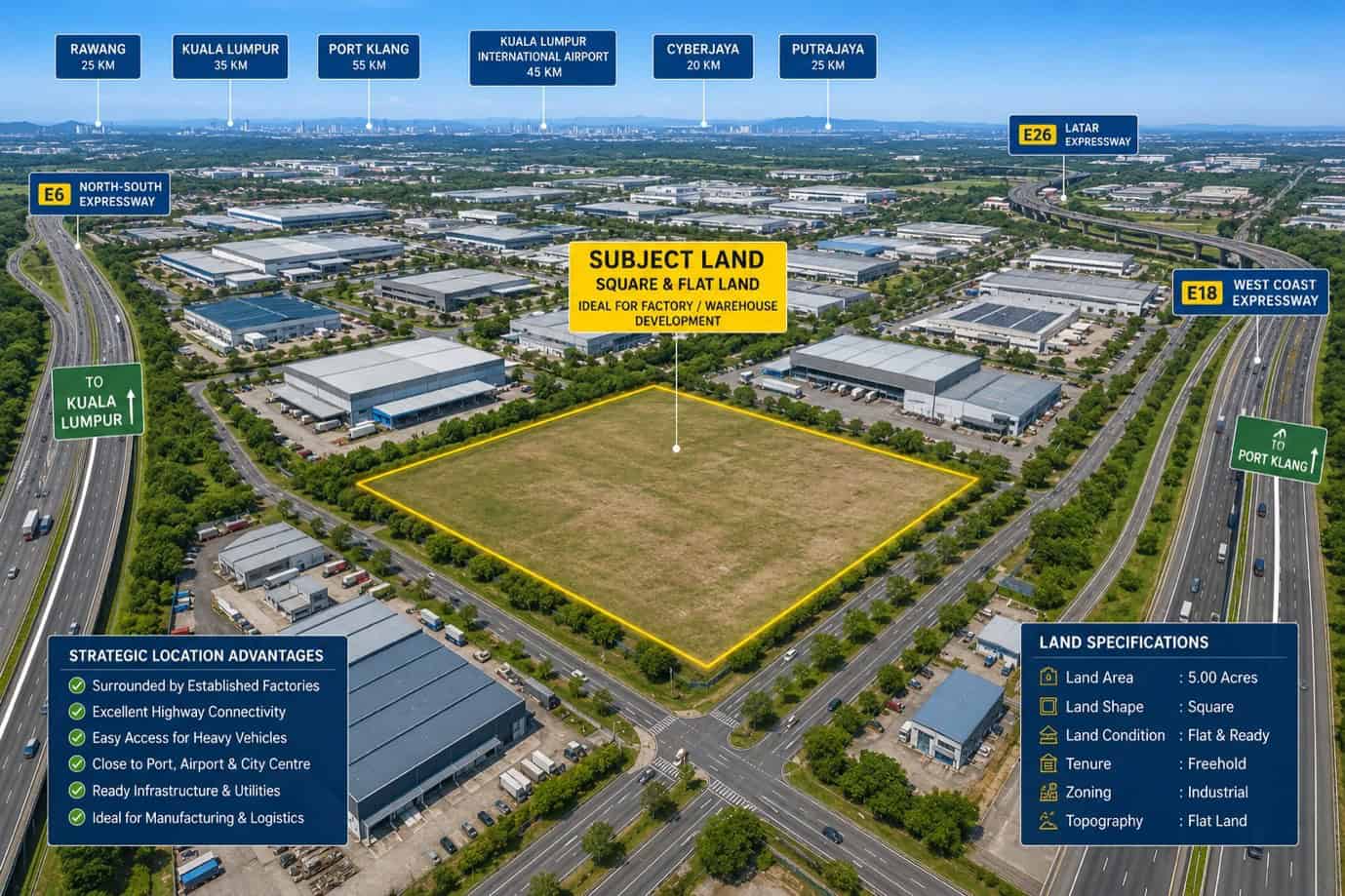
9. Evaluate the Land Shape
A regular shaped parcel is generally easier and more cost effective to develop.
Preferred characteristics include:
- Rectangular layout
- Wide frontage
- Efficient building layout
- Easy vehicle circulation
Irregular shapes may reduce usable development area.
10. Understand the Land Topography
Inspect whether the land is:
- Flat
- Sloping
- Elevated
- Low lying
Steep or uneven land may require extensive earthworks and retaining structures.
11. Review Soil Conditions
Ground conditions directly affect foundation design and construction cost.
Depending on the project, a soil investigation may be recommended before purchase.
12. Check for Existing Structures or Restrictions
Inspect the site for:
- Existing buildings
- Utility poles
- Pipelines
- Transmission lines
- Easements
- Reserved land
- Occupants
These may limit future development.
13. Understand Development Restrictions
Every site may have planning limitations.
These may include:
- Building height
- Plot ratio
- Setback requirements
- Environmental conditions
- Buffer zones
Knowing these restrictions helps determine development potential.
14. Evaluate the Surrounding Area
Nearby developments can influence both operations and long term value.
Consider:
- Existing industries
- Residential neighbourhoods
- Commercial centres
- Public transport
- Future infrastructure projects
A strategic location often provides stronger appreciation potential.
15. Review Highway Connectivity
Accessibility is a major consideration for industrial and commercial properties.
Look for convenient connections to:
- Major expressways
- Ports
- Airports
- Distribution centres
- City centres
Good connectivity improves logistics efficiency and business operations.
16. Budget for Professional Fees
Land acquisition involves more than just the purchase price.
Professional services may include:
- Lawyer
- Town Planner
- Licensed Land Surveyor
- Engineer
- Architect
- Valuer
Engaging experienced professionals early can reduce costly mistakes.
17. Prepare for Additional Costs
Buyers should budget for additional expenses such as:
- Legal fees
- Stamp duty
- Valuation fees
- Land conversion premium if applicable
- Development charges
- Utility connection fees
- Submission fees
These costs should be considered before making an offer.
18. Assess Future Development Potential
Ask whether the land offers opportunities for future growth.
Examples include:
- Expansion potential
- Future highway access
- Nearby industrial developments
- Government infrastructure projects
- Long term investment value
Future potential often plays an important role in investment decisions.
19. Conduct Proper Due Diligence
Before signing the Sale and Purchase Agreement, verify all important information independently.
This may include:
- Land title search
- Planning status
- Zoning confirmation
- Ownership verification
- Outstanding restrictions
- Utility availability
Proper due diligence helps minimise risk and unexpected costs.
20. Engage the Right Property Professionals
Purchasing land involves legal, technical and planning considerations.
Working with experienced professionals can provide valuable guidance throughout the acquisition process.
Depending on the project, this may include:
- Industrial property specialist
- Lawyer
- Town Planner
- Licensed Land Surveyor
- Engineer
- Architect
- Valuer
Common Mistakes Land Buyers Should Avoid
Some of the most common mistakes include:
- Buying based only on price
- Not checking planning zoning
- Assuming land conversion is automatic
- Ignoring utility capacity
- Overlooking flood risk
- Not reviewing title restrictions
- Underestimating development costs
- Rushing into the purchase without professional advice
Avoiding these mistakes can save significant time and money.